

Consumers in the UK are curious about where their food comes from, but many lack clear information about cultivated meat. This newer option, made from animal cells, offers potential benefits like reduced greenhouse gas emissions, fewer resources used, and better animal welfare. Yet, misconceptions about its safety, taste, and production keep many sceptical.
Key insights:
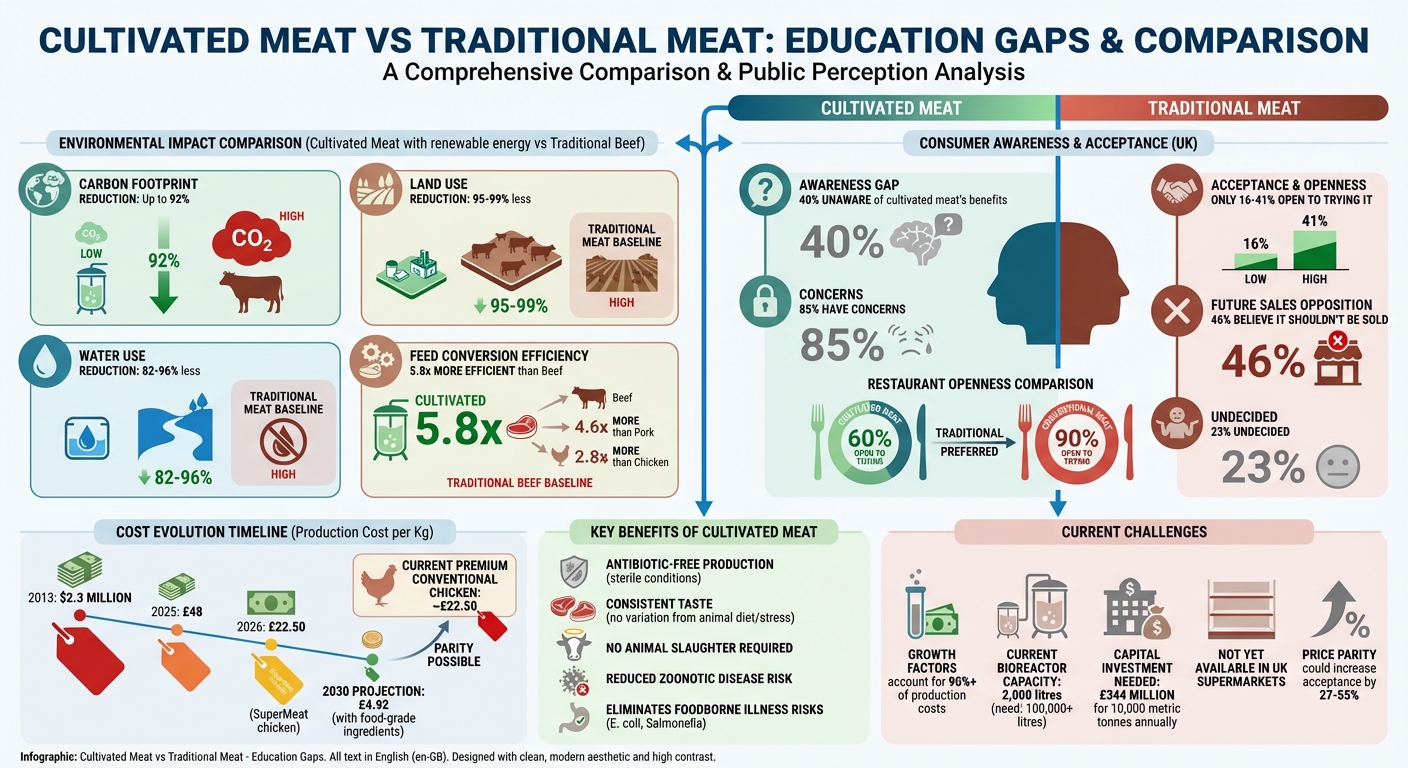
- Misunderstandings: 40% of UK adults are unaware of cultivated meat's benefits, like cutting emissions by up to 92%.
- Taste & Trust: Cultivated meat tastes the same as traditional meat but struggles with consumer trust.
- Cost & Availability: High production costs (£22.50/kg for chicken) and limited availability hinder market entry.
- Health & Ethics: It's grown in sterile conditions, free from antibiotics, but safety concerns persist.
Efforts like partnerships with retailers and platforms like the Cultivated Meat Shop aim to bridge these gaps by providing clear, science-backed information. Educating consumers is essential for wider acceptance when cultivated meat finally reaches UK shelves.
Cultivated Meat vs Traditional Meat: Key Statistics and Consumer Perceptions
Consumer Perceptions: Taste, Health, and Trust
Taste Comparisons and Familiarity
Traditional meat has a clear advantage when it comes to familiarity - its flavours are well-known and instantly recognisable. On the other hand, Cultivated Meat, being relatively new, often faces scepticism from UK consumers who are unsure about how cultivated meat tastes.
Interestingly, scientific research confirms that Cultivated Meat is biologically identical to traditional meat. It contains the same muscle, fat, and connective tissue cells. When cooked, it undergoes the same Maillard reactions and caramelisation processes, delivering the familiar flavours and aromas people expect from meat [1]. Chefs have noted that it behaves just like conventional meat, absorbing marinades and seasonings in the same way, which makes it a promising option for culinary applications [1].
In taste tests, products like burgers and nuggets made from Cultivated Meat score similarly to their traditional counterparts [1]. A notable milestone came in March 2026, when the Israeli company SuperMeat achieved a production cost of £10.20 per pound (approximately £22.50 per kilogram) for its 100% Cultivated Meat chicken. This pricing places it within reach of premium conventional chicken, making it more competitive in the market [1]. Additionally, unlike traditional meat, which can vary in flavour due to factors like the animal's diet or stress levels, Cultivated Meat offers a consistent taste - an appealing feature for food manufacturers and professional kitchens [1].
While taste is a major factor, perceptions around health and safety also play a significant role in consumer acceptance.
Health Perceptions and Misinformation
Despite its potential, trust in Cultivated Meat remains a hurdle. Many consumers currently view the food safety of traditional meat and plant-based alternatives more favourably than Cultivated Meat [5]. This scepticism often stems from a lack of familiarity and the spread of misinformation.
The numbers paint a clear picture: 85% of consumers have concerns about Cultivated Meat [6]. In the UK, only 16% to 41% of people are open to trying it, while 46% believe it shouldn't be sold in the future. Meanwhile, 23% are undecided, primarily due to uncertainties about safety and regulations [6]. Interestingly, 59% of consumers acknowledge potential benefits, such as better animal welfare and reduced environmental impact, yet safety concerns continue to dominate the discussion [6].
One of Cultivated Meat's key strengths is its production process. It is grown in sterile, closed bioreactors, which removes risks associated with foodborne illnesses [1]. However, without clear and effective communication, many consumers remain unaware of these advantages.
Traditional meat benefits from decades of trust and familiarity, but Cultivated Meat must work harder to build consumer confidence. Even terminology makes a difference. Research shows that consistently referring to the product as "Cultivated Meat" improves perceptions of its safety [6]. Moreover, public trust in regulatory bodies plays a crucial role. Consumers who believe authorities will ensure the safety of new products are far more likely to try Cultivated Meat [6]. Unfortunately, many in the UK are unaware that these products must pass rigorous Food Standards Agency approval before they can be sold, just like any other novel food.
Addressing these health concerns is vital, especially as the conversation shifts towards the broader ethical and environmental benefits of Cultivated Meat.
sbb-itb-c323ed3
Environmental and Ethical Messaging Gaps
Environmental Benefits of Cultivated Meat
Cultivated meat could significantly impact the environment for the better, but many people in the UK remain unaware of its potential. For instance, when cultivated meat is produced using renewable energy, it can slash the carbon footprint of beef by up to 92% [7]. It also requires far fewer resources - using 95% to 99% less land and 82% to 96% less water compared to traditional beef farming [7][8][10]. On top of that, it’s far more efficient in converting feed into meat: 5.8 times more efficient than beef, 4.6 times more than pork, and 2.8 times more than chicken [7].
Bill Gates, in his book How to Avoid a Climate Disaster, describes the process:
Cultivated meat has all the same fat, muscles, and tendons as any animal… All this can be done with little or no greenhouse gas emissions, aside from the electricity you need to power the [plants] where the process is done
[7]. However, the environmental benefits depend heavily on the use of renewable energy. Without it, these advantages shrink considerably.
Despite these impressive stats, cultivated meat companies often struggle to communicate these benefits effectively. In contrast, traditional meat producers rarely discuss their environmental impact in their marketing. Instead, they focus on heritage, taste, and tradition. Some of these producers even push for labelling laws that would prevent cultivated meat products from using terms like "meat" or "beef" [8]. This creates an uphill battle for cultivated meat brands to get their message across, especially when ethical considerations also face similar challenges.
Ethical Considerations: Animal Welfare and Antibiotics
The ethical advantages of cultivated meat are clear but often poorly communicated. Many brands highlight their "slaughter-free" methods with slogans like "Real Meat without the pain", emphasising the elimination of animal suffering [1]. Unlike conventional meat, which involves slaughter and animal stress, cultivated meat is grown in sterile environments, ensuring no harm comes to animals.
Another major benefit is the absence of routine antibiotic use. Traditional livestock farming depends heavily on antibiotics, which contributes to the global problem of antibiotic-resistant bacteria - a growing concern flagged by the World Health Organisation [8][9]. Cultivated meat production, on the other hand, is entirely antibiotic-free thanks to its controlled, sterile conditions [7][8]. This process also eliminates risks associated with faecal contamination and zoonotic diseases [1].
Traditional meat marketing, however, tends to focus on taste, nutrition, and heritage, often sidestepping ethical and safety issues like E. coli and Salmonella. This leaves consumers who care deeply about animal welfare or antibiotic resistance unaware that cultivated meat offers a viable alternative. Ana Carolina Agne Ferreira Zão and her colleagues highlight this in their research:
By decoupling meat production from live animal rearing, cultured meat has the potential to reduce zoonotic spillover risk, minimise antibiotic reliance, [and] lessen environmental burdens
[9]. These gaps in communication point to a pressing need for better educational efforts and partnerships to help consumers understand the benefits of cultivated meat.
Challenges in Scaling and Availability
Affordability and Scaling Challenges
Cultivated meat faces a steep uphill battle when it comes to cost. Back in 2013, producing a kilogram of cultivated meat cost a staggering $2.3 million. Fast forward to 2025, and that figure dropped significantly to around £48 per kilogram. Still, that price is far from competitive with traditional meat options [11].
A major cost driver is the growth factors used in production. These are currently made using pharmaceutical-grade processes, which account for over 90% of production expenses. To make cultivated meat commercially viable, production costs for culture media costs need to fall below growth media need to fall below $1 per litre per litre [12][13].
Another hurdle is scaling up production. Current bioreactors max out at 2,000 litres, but achieving commercial viability requires systems capable of holding 100,000 litres or more. For context, building a facility capable of producing 10,000 metric tonnes of cultivated meat annually would need an estimated £344 million in capital investment [13][14]. Despite these challenges, there’s progress. In January 2024, researchers at Tufts University made a breakthrough by engineering bovine muscle stem cells to produce their own growth factors. This could significantly lower one of the most expensive aspects of production [12]. And if the industry can shift from pharmaceutical-grade to food-grade ingredients, costs might drop to around £4.92 per kilogram by 2030 [14].
Right now, though, the high costs and limited production capacity are keeping cultivated meat from making a significant dent in the market.
Availability and Consumer Access
The challenges of scaling and cost mean that cultivated meat hasn’t yet found its way into UK supermarkets. While traditional meat is a staple in every grocery aisle, cultivated meat is still missing, and this absence fuels consumer scepticism. As Joseph Balagtas, a Professor of Agricultural Economics at Purdue University, explains:
Given the fact that cell-cultured meat is not widely available, these results reflect consumer distrust of the unknown when it comes to food, which is a barrier for any novel food trying to break into the market [15].
Currently, production mirrors pharmaceutical manufacturing, which is both costly and energy-intensive, making mass-market availability a distant goal [3]. Consumer attitudes also reveal this gap: while about 90% of people are open to trying conventional meats in restaurants, only 60% say the same about cultivated meat [15]. This hesitation is understandable - after all, how can people trust a product they haven’t seen or tasted?
Interestingly, studies suggest that if cultivated meat achieves price parity with traditional meat, consumer acceptance could jump significantly - by as much as 27% to 55% [11]. But until production scales up and these products hit store shelves, many consumers will remain in the dark, unsure of when or even if they’ll have the chance to try cultivated meat. For now, the industry faces a dual challenge: scaling production and bridging the education gap to build trust and familiarity.
Strategies to Bridge the Education Gap
Using Partnerships for Consumer Education
Cultivated Meat brands face a unique challenge: introducing consumers to a product that isn’t yet available. To address this, partnerships with regulatory bodies, scientific institutions, and retailers are becoming key to building trust and understanding.
Regulatory approval plays a vital role in educating consumers. When food safety authorities approve Cultivated Meat, brands can highlight its authenticity as real animal meat, produced safely through the cultivation of animal cells [2]. Backed by scientific research, this messaging helps distinguish Cultivated Meat from both traditional meat and other emerging food technologies. These collaborations also strengthen earlier efforts to explain production methods and safety standards.
Retailers, especially traditional meat sellers, can also help speed up consumer education. Supermarkets, with their established customer relationships, can introduce Cultivated Meat through in-store materials and staff training. By framing Cultivated Meat as a complementary option rather than a competitor, these partnerships make the concept more approachable and familiar to shoppers.
Research shows that clear and straightforward communication is crucial. A survey of 3,500 US consumers revealed that using simple descriptors increased product appeal by 18 percentage points and purchase intent by 10 percentage points [4]. Highlighting relatable aspects, like "it tastes just like meat", can resonate with consumers without overwhelming them with technical details. Together, these efforts create a foundation for public education campaigns and focused platforms to further engage consumers.
How Cultivated Meat Shop Supports Consumer Awareness
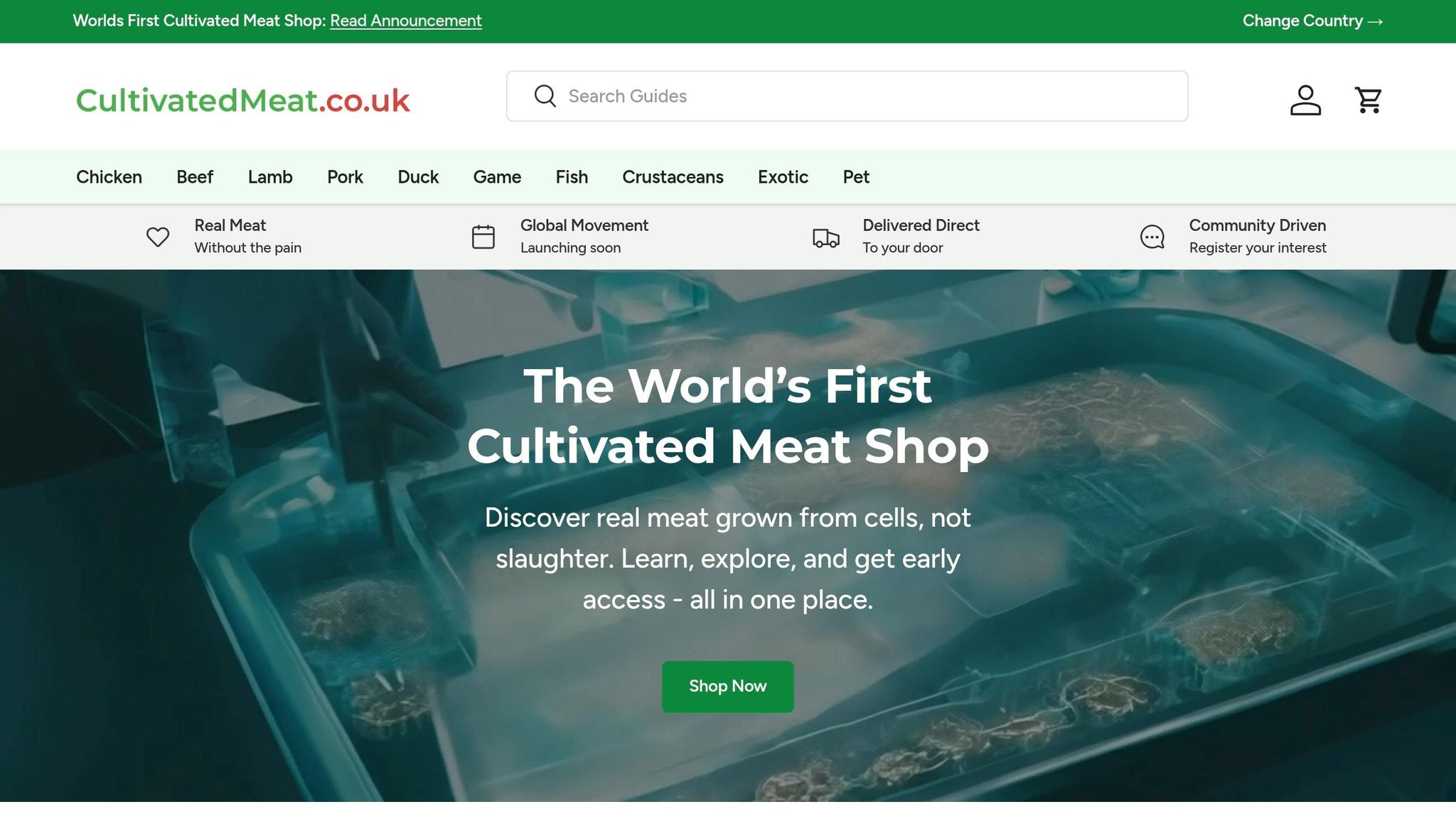
Building on these partnerships, the Cultivated Meat Shop is leading the charge in consumer education across the UK. As the first platform dedicated entirely to Cultivated Meat, it serves as a go-to resource for reducing confusion and providing clear, science-backed information. Topics include product types, taste, availability, health benefits, and environmental impact, all aimed at showcasing the promise of Cultivated Meat.
For UK consumers who are new to the concept, the Cultivated Meat Shop acts as a trusted source of information. It helps prepare shoppers for the future by offering waitlist sign-ups, product previews, and educational content that breaks down this new food category. This ensures consumers are ready and informed for the day Cultivated Meat hits supermarket shelves.
Lab-Grown vs Traditional Meat | Is Lab Grown Meat the Future?
Conclusion
The knowledge gap between Cultivated Meat and traditional meat remains a significant hurdle for UK consumers. While traditional meat enjoys the advantage of longstanding familiarity, Cultivated Meat must work to clearly communicate what it is, how it’s made, its benefits, and the challenges it faces.
Addressing this requires open and transparent communication. Highlighting benefits like improved animal welfare and reduced antibiotic use, alongside challenges such as production costs and environmental considerations, can help paint a balanced picture. The key lies in combining straightforward messaging with scientific credibility. Instead of overwhelming consumers with technical jargon, focusing on relatable ideas - like describing it as "real meat, grown from cells" - can help people grasp how it differs from traditional meat and plant-based alternatives. This kind of clarity is crucial for building trust in a category that’s still unfamiliar to many.
As Cultivated Meat approaches its UK launch, platforms such as Cultivated Meat Shop play an essential role in preparing consumers. By offering science-based, easy-to-understand content, these platforms help demystify the production process. This ensures that when Cultivated Meat products finally appear on supermarket shelves, consumers will feel informed and ready to make confident decisions about this innovative food option.
FAQs
How is cultivated meat regulated in the UK?
In the UK, cultivated meat is regulated under the novel foods framework. This means that any product must pass through rigorous safety and risk assessments before it can be approved for sale. Additionally, these products must include clear labelling that details their ingredients and production methods. Although no cultivated meat products have been approved yet, this regulatory process is in place to prioritise transparency and safeguard public health.
Why is cultivated meat still so expensive?
Cultivated meat is still pricey, mainly because of the steep costs tied to growth media, bioreactor systems, and developing cell lines - key components needed to ramp up production. However, as the industry progresses, efforts are underway to tackle these hurdles, with the goal of making cultivated meat more budget-friendly over time.
What partnerships could help UK shoppers trust cultivated meat?
Collaborating with restaurants, chefs, and public campaigns can go a long way in building trust around cultivated meat. For instance, events or pop-ups led by chefs give people the chance to taste it firsthand, showcasing its flavour and quality. Public education is equally important - transparent initiatives that explain production methods, safety standards, and environmental benefits can help demystify the process. Partnering with influencers and sharing easy-to-understand educational content through platforms like Cultivated Meat Shop can also play a big role in winning over consumers.


