

Cultivated chicken is real meat produced from chicken cells in a bioreactor, skipping the need to raise or slaughter animals. It cooks and tastes like conventional chicken, browning through the Maillard reaction and delivering consistent flavour and texture. Available mainly in ground forms like nuggets and burgers, it behaves predictably in recipes, whether pan-fried, grilled, or slow-cooked. Key highlights:
- Cooking Properties: Retains moisture well, with controlled fat distribution for consistent quality. Whole cuts are evolving to mimic natural muscle structures.
- Flavour: Matches conventional chicken, with reliable taste unaffected by animal diet or stress.
- Safety: Free from faecal contamination risks, but standard food safety practices still apply.
- Cooking Methods: Works well for frying, grilling, roasting, and air frying without requiring adjustments.
- Recipe Use: Perfect for stir-fries, breaded dishes, and curries, with slight tweaks for slow cooking to minimise shrinkage.
Cultivated chicken offers a dependable alternative for everyday cooking, bringing the same versatility and taste as conventional poultry.
Cooking Properties of Cultivated Chicken
Moisture, Fat and Texture
Cultivated chicken takes a different approach to texture compared to traditional chicken, which naturally develops its structure through growth and movement. Instead, cultivated chicken relies on scaffolding and mechanical stimulation to replicate the texture of conventional meat.
One of its standout features is the ability to control fat distribution during production. This means producers can fine-tune marbling and juiciness with a level of precision that’s hard to achieve in farm-raised poultry. As a result, cultivated chicken offers more consistent quality across batches. Ground formats, like nuggets, already demonstrate excellent moisture retention, making them a reliable option for various recipes.
Early experimental prototypes using bacterial nanocellulose scaffolds contained up to 97.86% water, with about 57% of their mass lost after 35 minutes of cooking [5]. As structured whole cuts become more common, home cooks might need to tweak cooking times slightly to account for this. However, manufacturers are actively working to minimise shrinkage during cooking.
These carefully controlled textural properties also pave the way for a dependable flavour experience.
Flavour and Browning
When it comes to flavour, cultivated chicken doesn’t disappoint. Since it’s real meat at the cellular level, it undergoes the Maillard reaction - the same process responsible for the golden-brown crust and savoury flavour in conventional chicken. Whether you’re searing or roasting, it browns beautifully and delivers that familiar, satisfying taste.
UPSIDE Foods has invested significant effort into ensuring their cultivated chicken matches the sensory qualities of traditional chicken. Their expert panels evaluate over 120 different attributes, confirming that the flavour, colour, and texture align with what you’d expect from conventional poultry [3].
"UPSIDE's chicken has color, flavor, and texture attributes that match conventional chicken... it behaves like conventional chicken." - UPSIDE Foods [3]
Another advantage is its flavour consistency. Unlike farm-raised chicken, which can vary in taste due to differences in diet, stress, or age, cultivated chicken offers the same flavour profile every time. In a 2024 preference test involving 30 participants, 67% chose a hybrid cultivated chicken product over a soy-based alternative, with an average replacement likelihood score of 8 out of 10 [4].
Its neutral, familiar taste also makes it an excellent canvas for marinades and spices, allowing you to enhance it just the way you like.
Food Safety and Doneness
Safety is a top priority when handling cultivated chicken. Thanks to its production in controlled bioreactor environments, it eliminates the risk of faecal contamination, a common source of foodborne illnesses in traditional poultry. However, standard food safety practices still apply.
- Cook cultivated chicken to an internal temperature of 75°C to ensure it’s fully cooked.
- Store it at 4°C or below, following the packaging’s recommended usage timeline.
- Handle it like conventional raw meat: wash your hands after touching it, avoid cross-contamination with ready-to-eat foods, and don’t leave it at room temperature for too long.
While browning and firmness can serve as visual cues for doneness, using a meat thermometer is the most reliable method to confirm it’s cooked thoroughly. By following these guidelines, you can enjoy cultivated chicken safely and with confidence.
I Tried Cultured Meat: Is It The Future of Food?
Recommended Cooking Methods for Cultivated Chicken
Thanks to its consistent texture and dependable browning, cultivated chicken works beautifully with a variety of cooking techniques.
Pan Frying and Sautéing
Cultivated chicken shines when pan-fried or sautéed, forming a golden crust similar to traditional poultry. The process is straightforward: preheat your pan, add enough oil or butter, and avoid overcrowding to ensure even cooking.
Chef Jess Weaver showcased this by preparing a cultivated chicken breast in a white wine butter sauce with tomatoes and capers. The result? A light, tender dish that could easily be mistaken for home-cooked chicken [6]. Using a fat-based sauce, like butter or cream, is a great way to lock in moisture, especially with leaner cuts like chicken breast.
For the best results, pat the chicken dry before cooking to enhance browning. When cooked in butter, it releases a mouth-watering aroma and absorbs marinades and seasonings just as well as conventional chicken.
Outdoor and high-heat methods also highlight the versatility of cultivated chicken.
Grilling and Air Frying
Grilling is an excellent option for cultivated chicken, as it undergoes the same Maillard reactions that produce those beloved char marks and smoky flavours. Preheat your grill, oil the grates lightly, and cook until the internal temperature reaches 75°C. There’s no need for special adjustments - cultivated chicken grills just like the traditional kind.
"You can sear it, roast it, grill it, prepare it any way you like, and it behaves like conventional chicken." - UPSIDE Foods [3]
Air frying is another fantastic choice, particularly for breaded or nugget-style cultivated chicken products, which are currently among the most popular formats. The circulating hot air creates a crispy coating while keeping the inside juicy. You can stick to your usual air fryer settings - no tweaks needed.
For those who prefer oven-based cooking, roasting and baking are also great options.
Roasting and Baking
Roasting cultivated chicken is as simple as roasting conventional poultry, and a two-stage method often delivers the best results. Start by roasting at 200–220°C for 15–20 minutes to develop a golden crust, then lower the temperature to 180°C to finish cooking.
Brushing the chicken with butter or oil before roasting helps achieve a beautiful, even browning. For extra crispness, pat the chicken dry beforehand; some cooks even leave it uncovered in the fridge for a short while to remove surface moisture.
Chef Zach Tyndall created a cultivated chicken thigh dish served with potato purée and a mushroom-vegetable demi-glace. The thigh meat successfully mimicked the rich flavour and tender texture of traditional dark meat [6].
Whether you’re preparing a simple tray bake or a hearty casserole, cultivated chicken performs consistently in the oven. Always ensure it’s cooked to an internal temperature of 75°C, and let it rest for 5–10 minutes before serving to allow the juices to redistribute evenly.
sbb-itb-c323ed3
Cultivated Chicken in Common Recipes
Cultivated chicken fits seamlessly into everyday cooking, requiring no special techniques or adjustments.
Quick Stir-Fries and Pasta Dishes
Cultivated chicken shines in fast, high-heat recipes, like stir-fries and pasta dishes, where small pieces cook evenly and quickly [1] [8].
In June 2023, Huber's Butchery and Bistro in Singapore introduced a cultivated chicken pasta dish to the public. The meal featured deep-fried strips of cultivated chicken, produced by Eat Just, paired with orecchiette pasta. Diners found the chicken "legit" and indistinguishable from traditional processed chicken [8].
Since some cultivated chicken products might have less fat than conventional cuts, using sunflower oil or butter during cooking can help replicate the familiar texture and flavour [7]. Marinades are also great for enhancing flavour in quick-cooking dishes. These recipes highlight how cultivated chicken can bring comfort and texture to familiar meals.
Breaded and Coated Comfort Foods
Cultivated chicken also performs well in crispy, coated dishes like nuggets, burgers, or breaded fillets. It reacts to frying just like traditional chicken, forming a golden-brown crust through the Maillard reaction, which enhances its flavour [1]. Cooking trials have shown that cultivated chicken maintains its "fillet-like" structure when air-fried at 180°C for 7.5 minutes. For best results, turn the pieces halfway through and ensure an even coating for maximum crunch [5].
In early 2022, SuperMeat hosted a blind taste test at its "The Chicken" restaurant in Tel Aviv. Master Chef judge Michal Ansky sampled cultivated chicken sautéed in sunflower oil without any seasoning and mistakenly identified it as conventional chicken, praising its "richer" flavour [7].
Curries, Soups, and Slow-Cooked Dishes
Cultivated chicken absorbs marinades and liquid seasonings just as well as traditional meat, making it an excellent choice for curries, soups, and braised dishes [1] [3]. However, some early prototypes have shown a tendency to lose moisture during prolonged cooking.
To minimise shrinkage, add cultivated chicken later in the cooking process for soups or curries, rather than simmering it for extended periods. For slow-cooked recipes, incorporating a bit of oil or fat can boost the flavour, especially when using leaner cultivated chicken products [7].
"UPSIDE chicken is just as versatile as conventional chicken precisely because of their similar fingerprints. You can sear it, roast it, grill it, prepare it any way you like, and it behaves like conventional chicken." - UPSIDE Foods [3]
Cultivated Chicken vs Conventional Chicken
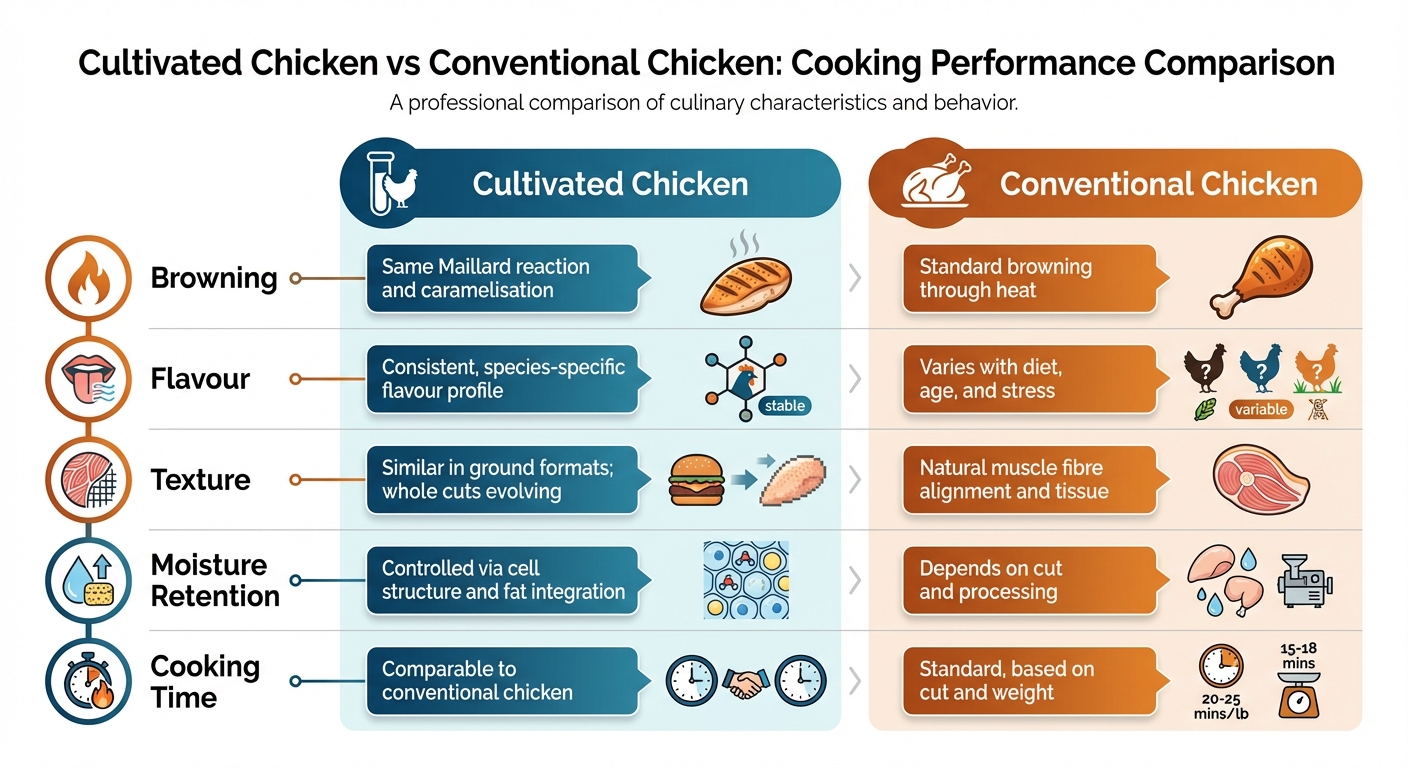
Cultivated Chicken vs Conventional Chicken: Cooking Performance Comparison
When it comes to cooking, cultivated chicken holds its own against conventional chicken thanks to its identical muscle proteins and sugars, which enable the Maillard reaction - the process responsible for browning and flavour development[1]. However, a key difference is its consistency. Cultivated chicken, grown under controlled conditions, avoids the variability seen in conventional chicken caused by factors like animal stress, diet, or handling[1].
Cooking Performance Comparison Table
| Feature | Cultivated Chicken | Conventional Chicken |
|---|---|---|
| Browning | Same Maillard reaction and caramelisation[1] | Standard browning through heat[1] |
| Flavour | Consistent, species-specific flavour profile[1] | Varies with diet, age, and stress[1] |
| Texture | Similar in ground formats; whole cuts evolving[1] | Natural muscle fibre alignment and tissue[1] |
| Moisture Retention | Controlled via cell structure and fat integration[1] | Depends on cut and processing[1] |
| Cooking Time | Comparable to conventional chicken[3] | Standard, based on cut and weight |
How to Cook with Cultivated Chicken
At present, cultivated chicken shines in ground or processed forms like nuggets, burgers, and fillets, where uniform texture is a priority[1][3]. If using early products that might be leaner than conventional cuts (especially compared to skin-on pieces), consider adding extra oil or butter during cooking to maintain moisture[7].
For slow-cooked dishes such as soups or curries, it's best to add cultivated chicken later in the cooking process rather than letting it simmer for extended periods. This is particularly important when working with leaner cuts. Otherwise, you can treat cultivated chicken just like conventional chicken - whether you're searing, roasting, grilling, or frying - and expect similar results[3].
Choosing the Right Cultivated Chicken Product
To get the best results, match the cultivated chicken product to your recipe. Ground cultivated chicken works perfectly for dishes like tacos, meatballs, or burgers, while moulded fillets are great for quick cooking methods like pan-frying or air-frying[1][2]. Because cultivated chicken is produced in a controlled environment, its cooking performance is more predictable than that of conventional chicken, which can vary widely depending on factors like farm conditions, feed, and breed[1].
As the industry evolves, producers are working to refine fat content and distribution to enhance flavour and juiciness during cooking[1]. These advancements could lead to products designed for specific recipes or dietary needs, opening up even more possibilities in the kitchen.
Conclusion
Cultivated chicken behaves just like traditional chicken when cooked because its structure closely resembles that of its conventional counterpart. It browns beautifully through the Maillard reaction and works well with a variety of cooking methods, including searing, roasting, grilling, and air frying[1].
Thanks to its controlled production process, cultivated chicken delivers consistent flavour and texture every time. Unlike conventional chicken, it avoids the variations caused by factors like animal stress, diet changes, or handling practices[1]. At present, it shines in ground and processed forms, making it perfect for dishes like stir-fries or breaded favourites. As advancements continue, the development of whole-cut products will open up even more culinary possibilities[1].
From quick weeknight meals to slow-cooked recipes, cultivated chicken offers a dependable and safe option, all without sacrificing taste or versatility.
FAQs
What does cultivated chicken taste like compared to traditional chicken?
Cultivated chicken is designed to mimic the taste of traditional chicken, delivering that mild, savoury flavour people are so familiar with. Some tasters even note a slightly "cleaner" or more refined profile, paired with a gentle richness. That said, because it contains less fat compared to conventional chicken, it might not feel as juicy or flavourful unless you add a bit of seasoning or fat.
To bring out its best, simple kitchen tricks like marinating, butter-basting, or adding extra fat can help recreate the rich depth and satisfying texture of farm-raised chicken. In essence, cultivated chicken comes remarkably close to the real thing, with just a few tweaks needed to match its counterpart.
Do I need to use special techniques to cook cultivated chicken?
Cultivated chicken can be prepared much like traditional chicken, but a few tweaks can help you get the best out of it. Since it doesn’t have the same connective tissue as conventional cuts, low heat and shorter cooking times are essential. For instance, if you’re boiling it, keep the water temperature between 85°C and 95°C, and aim for a cooking time of just 10–20 minutes. Afterwards, a quick sear in a hot pan can add a lovely crust and improve the texture.
To keep the meat juicy, try pre-treating it with a light brine or marinade. This helps to retain moisture while also boosting its delicate flavour. A digital meat thermometer is handy here - stop cooking as soon as the internal temperature hits 75°C. If you’re after an extra tender result, sous-vide is a great option. Cook it at 60–65°C for 30–45 minutes, then finish with a brief sear for that perfect balance of tenderness and texture.
By focusing on gentle heat, shorter cooking times, and pre-marinating, cultivated chicken can shine in any dish, whether it’s a stir-fry, a roast, or anything in between - all without losing its flavour or texture.
Is cultivated chicken as safe to eat as traditional chicken?
Yes, cultivated chicken is safe to eat. The UK Food Standards Agency conducts stringent scientific evaluations to ensure its safety, confirming that its risk level is comparable to that of traditional chicken.
Because cultivated chicken is grown in controlled environments, it avoids many of the common food safety issues linked to conventional meat, such as bacterial contamination. This process ensures it adheres to strict quality and safety standards before it becomes available to consumers.


