

Cultivated meat, grown from animal cells in bioreactors, offers the same taste and texture as conventional meat without the need for farming or slaughter. While it’s not yet available for purchase in the UK, regulatory progress is underway. The Food Standards Agency (FSA) is working with companies like Ivy Farm Technologies and Hoxton Farms to evaluate safety, aiming for approvals by 2027. Early tastings are expected to debut in fine-dining restaurants through limited events or collaborations.
Key points:
- Current UK status: Not yet authorised for public consumption.
- Regulatory progress: FSA’s sandbox programme involves eight companies; approvals expected by 2027.
- First servings: Likely in high-end restaurants as part of tasting menus or single-dish features.
- Cost: Early tastings will be premium-priced (£73–£145 per person).
- UK milestones: Approved for pet food in 2024; human trials ongoing.
Stay informed through platforms like Cultivated Meat Shop, which tracks regulatory updates and tasting opportunities.
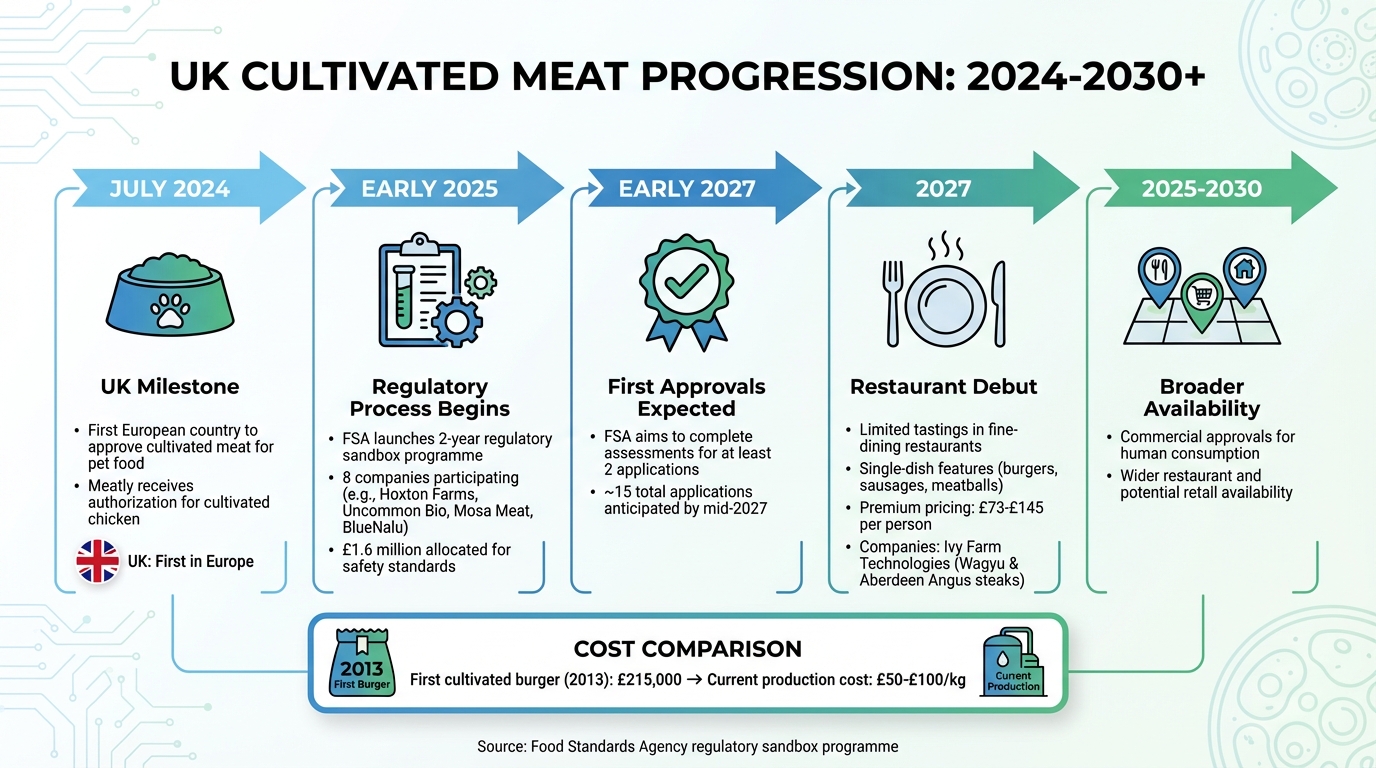
UK Cultivated Meat Timeline: From Pet Food to Restaurant Debut 2024-2027
Current Status of Cultivated Meat in the UK
What Is Cultivated Meat?
Cultivated meat is made by growing animal cells in bioreactors to produce muscle, fat, and connective tissue that are identical to traditional meat. It offers the same taste and texture but with a reduced environmental footprint - lower methane emissions, less land and water use, and no need for animal slaughter. It could also provide a nutritionally tailored alternative to conventional meat [7][4].
UK Regulatory Status
Despite its potential, cultivated meat is not yet approved for human consumption in the UK. The Food Standards Agency (FSA) and Food Standards Scotland are conducting a two-year regulatory sandbox, which began in early 2025, to evaluate its safety. This initiative involves eight companies, including Hoxton Farms, Uncommon Bio, Mosa Meat, and BlueNalu. To support this process, £1.6 million has been allocated to develop standards for safety, hygiene, and labelling [3][4][6]. The FSA aims to complete assessments for at least two applications by early 2027.
"We are working very closely with the companies involved and academic groups to work together to design a regulatory structure that is good for them, but at all costs ensures the safety of these products remains as high as it possibly can." - Prof Robin May, Chief Scientific Officer, Food Standards Agency [4]
The UK has already taken a step forward in this field. In July 2024, it became the first European country to approve cultivated meat for pet food. The start-up Meatly received authorisation from the Animal and Plant Health Agency and Defra to sell cultivated chicken for animal feed. This milestone demonstrates the technology's safety and its production capabilities [5].
What This Means for Diners
Although cultivated meat is not yet available on UK menus, its introduction is on the horizon. Early approvals, expected by 2027, could lead to limited foodservice trials. These are likely to include fine-dining tasting menus or special featured dishes. For example, Oxford-based Ivy Farm Technologies submitted an application in early 2024 to supply cultivated Wagyu and Aberdeen Angus steaks to UK restaurants and is currently awaiting approval [3][4][2].
sbb-itb-c323ed3
The future of meat? Inside the Oxford-based startup turning cells into 'steaks'
How Cultivated Meat Will Likely Debut in UK Restaurants
As diners across the UK anticipate the arrival of Cultivated Meat, here’s a look at how high-end restaurants might introduce it to their menus.
Fine-Dining Tasting Menus
Cultivated Meat is likely to make its UK debut in Michelin-starred restaurants and other exclusive dining spots in London and major cities. This approach mirrors what happened in Singapore, where cultivated chicken was first served at the upscale 1880 restaurant in 2020 before gradually becoming available elsewhere [8]. Early tastings in the UK are expected to be limited-time events, giving chefs the chance to highlight the cutting-edge technology while working within the constraints of limited initial supply [11, 13]. Unlike these exclusive launches, many other restaurants are expected to take a more straightforward approach.
Single-Dish Features
Instead of revamping entire menus, most restaurants are expected to introduce Cultivated Meat through a single dish alongside their existing offerings. These dishes will likely feature minced or ground meat formats, such as burgers, sausages, meatballs, or nuggets, as these are easier to produce than whole-cut options like steaks [17, 20]. For instance, Ivy Farm Technologies is already developing a "slaughter-free sausage" specifically for the restaurant industry [9].
"Ivy Farm plans to put Britain on the map in this emerging global industry by producing cultured meat products – beginning with a slaughter-free sausage – for supermarkets and the restaurant trade."
– Dr. Russ Tucker, Co-founder, Ivy Farm Technologies [9]
In the early stages, hybrid dishes blending animal cells with plant-based ingredients may also appear. These combinations help manage production costs and refine texture [2]. While the cost of small-scale production has dropped significantly - from £215,000 for the first cultivated burger revealed in London in 2013 to between £50 and £100 per kilogram today - it’s still far from affordable for mass-market adoption [2, 18]. Alongside permanent menu additions, temporary collaborations will also play a key role.
Limited-Time Collaborations and Events
To navigate supply limitations, food-tech companies are teaming up with restaurants for short-term collaborations and events [2]. Singapore offers a precedent here: Huber's Butchery served cultivated chicken strips in dishes like "spring vegetable orecchiette" priced at around £11, following successful trials at 1880 [8]. Similar partnerships could soon bring Cultivated Meat to UK diners, with industry leaders hinting at initial availability by 2027 [3]. These collaborations may provide the first opportunities for British consumers to experience Cultivated Meat in a real-world setting.
UK Companies and Partnerships To Watch
The UK is emerging as a key player in the early adoption of Cultivated Meat, with several companies taking the lead in bringing this innovative food to the nation's plates. Here's a closer look at the businesses driving this movement.
Ivy Farm Technologies
Ivy Farm Technologies has established Europe's largest Cultivated Meat pilot plant in Oxford. Spanning 18,000 square feet, this facility houses a 600-litre bioreactor capable of producing an impressive 2.8 tonnes (6,000 lbs) of cultivated meat annually [10]. Their primary focus is on foodservice, offering cultivated pork and beef mince products like burgers, meatballs, and sausages [13].
In February 2024, Ivy Farm joined forces with Fortnum & Mason, the iconic London grocer, to create the world’s first cultivated meat scotch egg. This innovative product was showcased during a "Future of Meat Production" panel held at Fortnum's Food & Drink Studio, highlighting how cultivated beef mince can be incorporated into classic British dishes [15].
"Once we have scaled up, collaborations and partnerships like this will be pivotal as we look to introduce consumers to cultivated meat products on a wider scale, building acceptance in their quality and taste."
– Emma Lewis, Chief Commercial & Product Officer, Ivy Farm Technologies [15]
Looking ahead, Ivy Farm plans to sell cultivated muscle and fat as raw ingredients to other food producers before eventually launching its own direct-to-consumer brand. To date, they’ve raised over $30 million to support their technological growth [12][14].
Hoxton Farms
Hoxton Farms is taking a different approach by focusing on cultivated animal fat. Their aim is to provide chefs and food producers with a high-quality fat ingredient to enhance the flavour and texture of plant-based or hybrid meat products [11]. This ingredient-first strategy means their work is likely to debut in restaurant dishes rather than as standalone products.
Uncommon

Formerly known as Uncommon Bio, Uncommon is working on cultivated pork products [11]. Their involvement in the FSA's regulatory sandbox could help streamline the approval process, potentially allowing their products to appear on restaurant menus as early as 2027 or 2028 [11].
International Companies Targeting the UK
In addition to UK-based innovators, several international companies are eyeing the British market. Dutch firm Mosa Meat, US-based BlueNalu, and French companies Gourmey and Vital Meat are all collaborating with UK regulators through the FSA's Engineering Biology Sandbox [11]. Australian company Vow has also joined the programme [11].
"By supporting the safe development of cell-cultivated products, we're giving businesses the confidence to innovate and accelerating the UK's position as a global leader in sustainable food production."
– Lord Vallance, UK Science Minister [11]
Checklist: How To Be First To Try Cultivated Meat
Keeping Up With Announcements
Stay in the loop by subscribing to updates from the FSA and FSS about the UK Cell-Cultivated Products Sandbox Programme [16][3]. Pay attention to key companies involved in the programme, such as Hoxton Farms, Roslin Technologies, Uncommon Bio, BlueNalu, Mosa Meat, Gourmey, Vital Meat, and Vow [16][3].
You can also sign up for newsletters from UK-based innovators and use platforms like Cultivated Meat Shop to join waitlists and track product availability [1][2]. For example, Ivy Farm Technologies has already applied to sell cultivated steaks to restaurants and could launch as soon as they receive authorisation [4]. By staying proactive and supporting public awareness campaigns, you'll position yourself to be among the first to attend tasting events.
Booking Tips
When announcements are made, act quickly to secure your spot and stay flexible with your plans. These tasting opportunities will likely be short-term events or trials under regulatory supervision [3]. Be ready for pre-paid tickets or set tasting menus, and consider booking smaller tables to increase your chances - venues will aim to serve as many curious diners as possible during these limited events.
Focus on locations like Ivy Farm Technologies' hub in Oxford or upcoming events in London [4][2]. The FSA expects to receive around 15 applications from cultivated meat producers by mid-2027, meaning these opportunities will gradually become more accessible [3]. With these tips, you'll be well-prepared to experience cultivated meat as it becomes available.
What To Expect at Early Tastings
Once you've secured your spot, here's what you can anticipate. Early tastings are likely to focus on small portions rather than full meals [2]. Menus may feature ground meat options like burgers, nuggets, and meatballs, with many dishes combining cultivated cells and plant-based ingredients [2].
Pricing will reflect high-end dining experiences, ranging from about £73 to £145 per person [17]. At these events, you'll often have the chance to meet chefs or company representatives, who will share details about the cultivation process and gather your feedback on taste and texture [2]. While production costs have significantly dropped - from the eye-watering £250,000 for the first cultivated burger in 2013 to £50–£100 per kilogram today - these early dining opportunities will still come with a premium price tag [2].
Using Cultivated Meat Shop To Stay Informed
Learn About Cultivated Meat
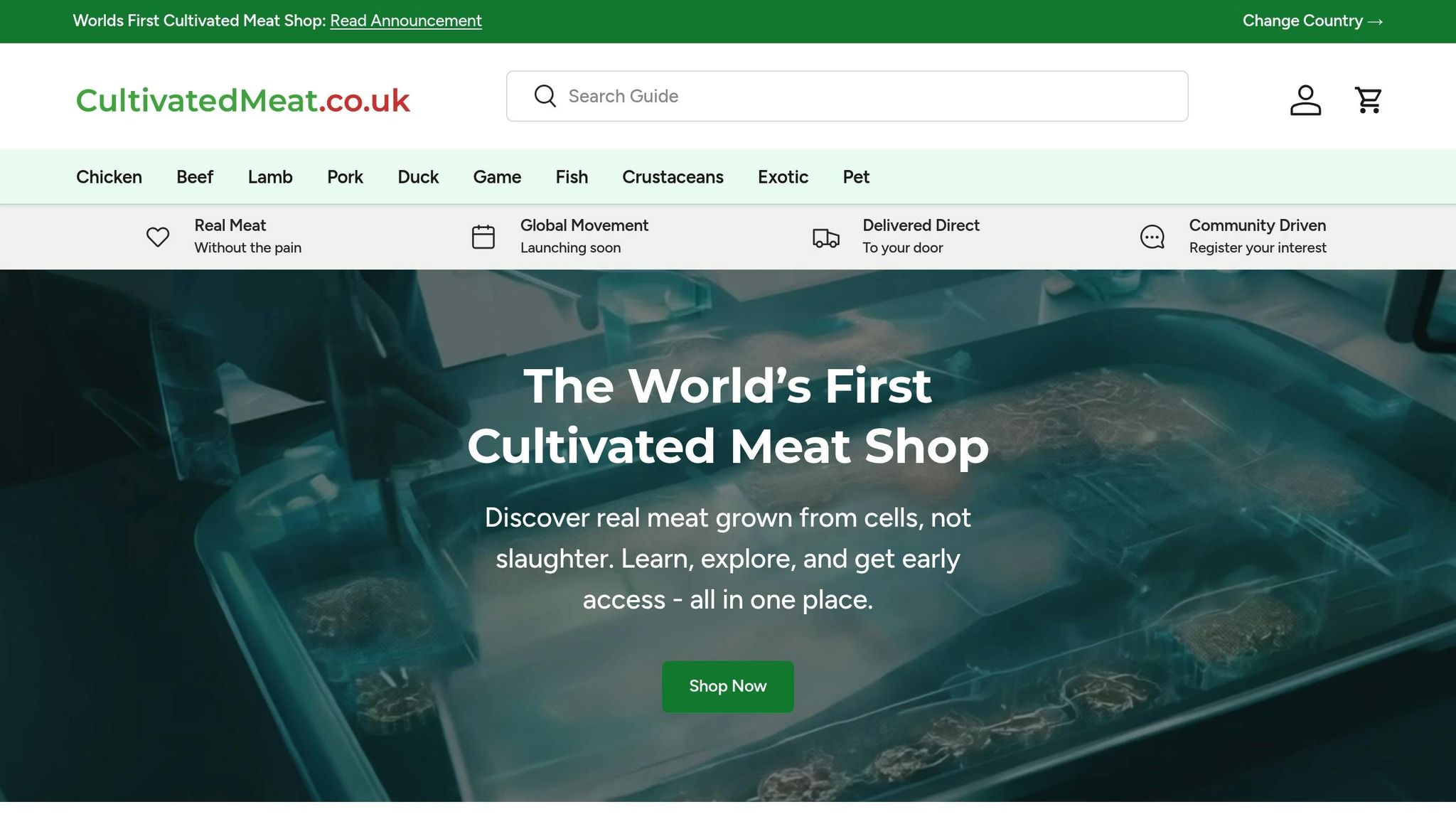
If you're planning to try Cultivated Meat at one of the UK's first restaurant tastings, Cultivated Meat Shop is a great resource to get started. The platform provides clear, science-backed guides that explain everything from taste and texture to how it performs in the kitchen - helpful details for anyone new to this innovative food. In January 2026, they rolled out consumer-focused reports like "How Cultivated Chicken Performs in the Kitchen" and "Supermarkets and Cultivated Meat: What to Know". These resources are designed to help the public prepare for when Cultivated Meat becomes more widely available [1][2].
Track UK Availability
The platform also keeps you updated on where and when Cultivated Meat will be available in the UK. Their Insights & News section provides real-time updates on regulatory developments, including details about the Food Standards Agency's regulatory sandbox programme. This initiative currently involves eight companies, such as Hoxton Farms and Uncommon Bio, as they work towards bringing these products to market. With the FSA anticipating around 15 applications from cultivated meat businesses by 2027, these updates can help you pinpoint which restaurants might introduce Cultivated Meat first. Whether it's limited restaurant trials or broader availability, the platform ensures you're always in the loop [3].
Join Waitlists and Notifications
Want to be among the first to try Cultivated Meat? The Register your interest feature on Cultivated Meat Shop makes it easy. By joining the waitlist, you'll receive early notifications about upcoming product launches and restaurant tastings, often before the general public. Plus, the Delivered Direct feature will alert you when Cultivated Meat becomes available for home delivery. This means you can enjoy these cutting-edge products in your own kitchen as soon as they hit the market. Together, these tools make Cultivated Meat Shop your go-to guide for staying updated on the latest launches in the ever-changing UK dining scene.
Conclusion
Cultivated Meat hasn’t yet made its way onto UK restaurant menus, but progress is clearly underway. The Food Standards Agency’s £1.6 million regulatory sandbox programme is helping companies like Ivy Farm Technologies, Hoxton Farms, and Uncommon navigate the approval process [18]. While you can’t reserve a table to try Cultivated Meat just yet, there’s been movement - like the UK’s approval of cultivated chicken for pet food in July 2024 - indicating that the regulatory wheels are turning [19][20].
For now, early tastings are expected to roll out through collaborations with fine-dining establishments and exclusive events. Research-led tasting trials are currently allowed, so staying alert for announcements from UK producers might be your best chance to get an early taste [18].
If you’re keen to stay in the loop, Cultivated Meat Shop is a valuable resource. Its Insights & News section offers updates on global regulatory progress, and the Register your interest feature ensures you’ll be notified about upcoming tastings and product launches.
While broader availability is still a few years away, with commercial approvals for human consumption anticipated between 2025 and 2030 [2], now’s the time to join waitlists and keep an eye on developments. Early adopters will be first in line for these exclusive opportunities.
FAQs
When will cultivated meat be available to buy in the UK?
Cultivated meat isn't available for purchase in the UK just yet, and there's no confirmed launch date at the moment.
However, the industry is steadily moving towards regulatory approval, meaning cultivated meat could appear in select locations in the future. In the meantime, you can check out resources like Cultivated Meat Shop to stay updated, join waitlists, and dive deeper into this emerging food category.
How is cultivated meat better for the environment compared to traditional meat?
Cultivated meat stands out as a way to greatly lessen the environmental strain caused by traditional meat production. Conventional livestock farming is responsible for about 18% of global greenhouse gas emissions, with methane from animals and the energy demands of feed production and land use being major contributors. By growing real animal cells in controlled settings, cultivated meat sidesteps the need for large-scale animal farming, cutting down on methane emissions, land use, and water consumption.
This method also skips many of the resource-heavy steps involved in the traditional meat supply chain. Research shows that cultivated meat uses fewer resources, like feed and freshwater, while still offering the same taste and nutritional benefits as conventional meat. The result? A much smaller carbon footprint, making it an appealing choice for those aiming to minimise their impact on the planet.
How much does it cost to try cultivated meat in UK restaurants?
The pricing for cultivated meat dishes in UK restaurants isn't fully established yet, as this new type of food is still making its way into the market. The cost can depend on factors like the restaurant, the dish itself, and how far along the production process has scaled at the time.
As this option becomes more widely available, prices are likely to shift. For the most accurate and current details, it's a good idea to check directly with the restaurant.


